For most cruise passengers, Miami International Airport to PortMiami looks like an easy transfer. The distance isn’t huge. For someone traveling with a wheelchair, power chair, mobility scooter, or similar equipment, though, the distance is only part of the story.
There are several handoffs before you reach the ship. Airport assistance may be involved. Checked mobility equipment has to be collected and inspected. Then you need transportation that actually works with the equipment you’re bringing, followed by the correct PortMiami terminal.
None of this needs to turn embarkation day into a project. It does help to sort out a few details before the flight.
Before flying to Miami
Start with the airline if you’ll need wheelchair assistance at Miami International Airport. According to MIA, wheelchair service is coordinated by individual airlines, so the request needs to be made with your carrier.
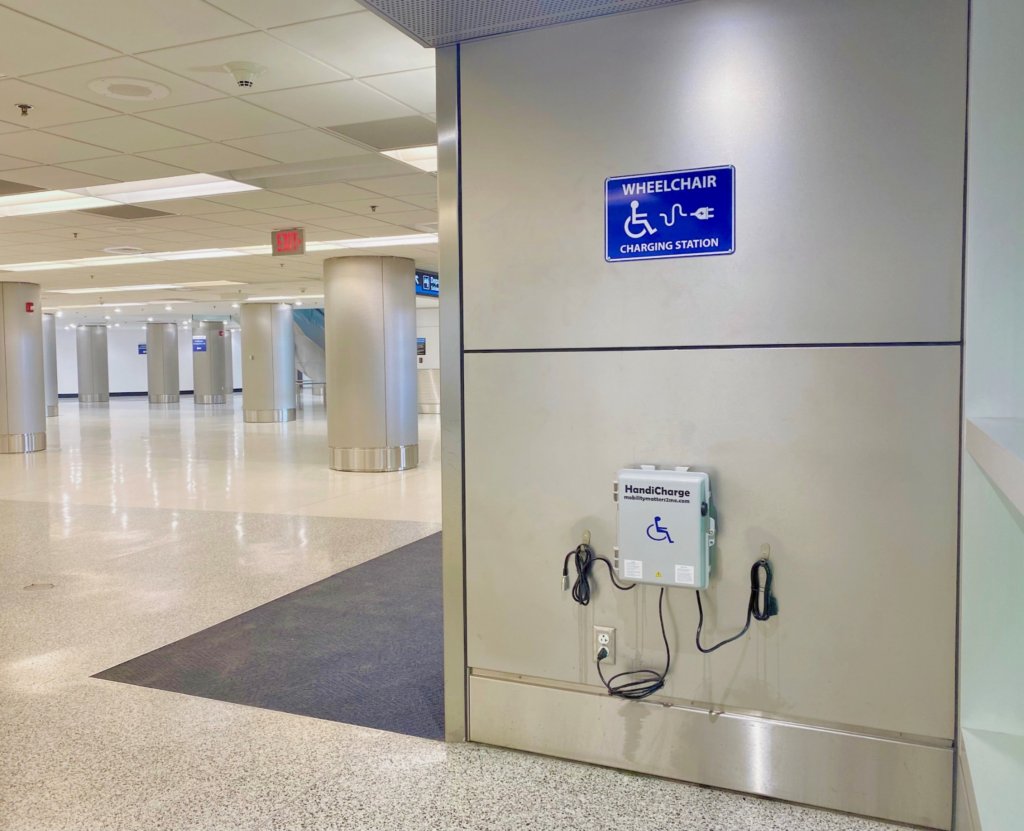
MIA’s myMIAccess program covers other accessibility services available around the airport. These include accessible restrooms and Aira visual assistance. The airport also provides wheelchair charging locations. MIA says 10 charging stations for electric wheelchairs and mobility scooters are located across concourses and pre-security areas.
It is worth speaking with the cruise line before departure as well. Procedures differ between cruise operators, particularly when passengers need help boarding or are bringing larger mobility equipment. Confirm what notice they require and whether there are any instructions tied to your cabin or ship.
Save the basics on your phone before leaving home: ship name, terminal information, boarding time, cruise-line contact details, plus the reservation for your ride from the airport.
After landing at Miami International Airport
There is rarely a good reason to rush from the aircraft straight toward the curb.
Passengers who arranged wheelchair assistance should receive help through the airport from the airline’s service. International arrivals will also need to go through the required immigration and customs process.
At baggage claim, pay particular attention to mobility equipment that was placed in the aircraft hold. Check the chair or scooter before leaving MIA. Controls can be damaged, cushions can disappear, and detachable components sometimes come back in a different condition than they left.
If you see damage, speak with the airline while you’re still at the airport.
Medication and travel documents are better kept with you. The same goes for small but necessary wheelchair or scooter accessories that would cause a real problem if they were buried inside a checked suitcase.
Before heading outside, take another look at the transportation instructions. A driver saying “meet at pickup” isn’t very helpful when you’re in a large airport with several exits and loading areas. A door number or exact pickup zone is much better.
Choosing transportation from MIA to PortMiami
A taxi, rideshare, cruise shuttle, or private transfer may all work for the airport-to-port trip. The question for a passenger using mobility equipment is whether the specific vehicle works.
A regular car can be fine for a traveler using a folding manual wheelchair. It may be completely unsuitable for someone who needs to remain in a power chair during the ride.
This is one area where booking before arrival can save hassle.
Call The Care provides accessible transportation from Miami Airport to PortMiami for passengers traveling with wheelchairs and mobility scooters. Its accessible vehicles use ramps or lifts along with wheelchair securement systems. Travelers can provide their flight details, group size, and cruise-terminal information when arranging the transfer.
Whichever provider you use, describe the equipment rather than simply requesting an “accessible car.” Tell them whether the wheelchair is manual or powered and whether the passenger will stay seated in it during the ride. Luggage matters too. A vehicle may have space for a wheelchair but not necessarily for several large cruise suitcases once everyone is inside.
Check the PortMiami terminal again
PortMiami has multiple cruise terminals. Going to the port isn’t quite specific enough.
Your cruise documents or cruise-line app should show the assigned terminal. Check it again on embarkation day because terminal assignments aren’t something I’d rely on from a screenshot saved weeks earlier.
Give the driver the terminal letter or number when one is available. That usually avoids confusion better than giving only the ship’s name.
Timing deserves some slack here. Traffic around Miami can change quickly, and the roads near PortMiami can get busy when several ships are processing arriving and departing passengers.
Accessibility at PortMiami
PortMiami provides accessibility information for passengers using its cruise terminals.

According to the official PortMiami accessibility page, accessible restrooms are available throughout the cruise terminals. The port states that these facilities include ADA-accessible toilet compartments and grab bars.
Wheelchair-accessible taxis are also listed among the port’s transportation options. These vehicles are modified to accommodate mobility devices, with drivers trained to secure passengers who travel in wheelchairs. PortMiami says wheelchair users aren’t charged an additional surcharge for using an accessible taxi.
Assistance with cruise check-in or boarding is different. That part is handled by the cruise line, so questions about getting through the terminal, boarding the ship, or receiving mobility assistance should go to the cruise operator.
Keep your passport or ID and boarding documents where you can grab them quickly. Digging through a large suitcase at the terminal isn’t much fun, especially when staff are waiting for paperwork.
Flying to Miami on embarkation day
It can work. It also removes a lot of margin for error.
A flight delay is the obvious concern, but smaller delays are sometimes what eat up the schedule. Wheelchair assistance may take longer than expected. Checked bags might be slow. A scooter could take extra time to arrive. Then there is the pickup itself and the drive to the port.
For travelers who prefer a calmer start, flying into Miami the previous day may make more sense. An overnight stay gives you time to check mobility equipment after the flight and recharge it if needed. The next morning, you’re dealing with a hotel-to-port transfer rather than an airport arrival plus a cruise check-in on the same clock.
Pay attention to the cruise line’s boarding deadline, not simply the ship’s scheduled departure. Those aren’t the same thing.
What belongs in your carry-on
Think about what you’d need if your checked luggage disappeared for several hours.
Your travel documents and medication should stay with you. So should the phone and whatever you use to charge it. For mobility equipment, carry small detachable items whenever airline rules allow it, especially pieces the device can’t operate without.
A scooter key is tiny. Losing it is not.
Saving travel details offline is useful too. Screenshot the terminal assignment and transportation reservation. Do the same with the hotel address if you’re staying overnight. Airport Wi-Fi and mobile data usually work until the exact moment you need one of them.
When you’re traveling with someone else, it also makes sense for both people to have the pickup and terminal details. That avoids one phone becoming the single source of everything.
Leave room in the schedule
Accessible travel often has more transitions than the same trip would for a passenger walking off the aircraft with a carry-on.
You might wait for airline assistance before baggage claim. Mobility equipment may come out separately from standard luggage. The driver has to load and secure the chair. At PortMiami, vehicles queue for drop-off before passengers move through baggage handling and cruise check-in.
A tight schedule turns ordinary delays into problems.
Extra time doesn’t make the trip exciting, but that’s probably the point. The nicest version of embarkation day is the one where the airport transfer is forgettable.
Getting from the airport to the cruise without the scramble
For an accessible cruise departure from Miami, the useful planning happens before the plane lands.
Confirm wheelchair assistance with the airline and check the cruise line’s own accessibility requirements. Verify the terminal again on embarkation day. For the transfer itself, choose a vehicle based on the actual mobility equipment you’re traveling with rather than assuming any airport ride will work.
Once those pieces are sorted, the trip between MIA and PortMiami becomes what it should be: a ride to the ship, not another obstacle before the vacation starts.